Pressure Washer 90 Degree Lance: Where a Bend Beats More Pressure
A straight wand cleans what it can see. A 90 degree lance cleans what it has to reach — as long as the bend carries flow instead of choking it.
A van parked 30 cm from a workshop wall. Behind the rear tire, an arch packed with mud that has baked hard over three winters. A straight lance cannot enter that gap, and turning the nozzle sideways just sprays the sidewall. This is the job a 90 degree lance was built for. It is also the job where the wrong 90 degree lance quietly costs you a fifth of your working pressure.
So here is the short answer first: choose a lance with a smooth internal bend, an inner diameter matched to the rest of your wand, and a sealed joint. At 150 bar, a good one loses roughly 3% to 8% of outlet pressure. A tight-radius, undersized version loses 15% to 25% at the cleaning surface. That spread is the difference between washing a fleet in an afternoon and still being at it after dark.
It is a short length of tube with a fixed bend — most often 90 degrees, though 45 degree and adjustable versions exist — mounted between the spray gun and the nozzle. It shows up in three forms:
The three solve different problems. A fixed elbow gives you one angle permanently, and it is the simplest and stiffest option. A swivel version trades a little rigidity for the ability to aim the jet into a wheel arch from the side. An adapter is the cheapest route because it reuses the lance you already own — but every extra threaded joint is an extra place for a leak to start.
One thing a 90 degree lance is not: a way to reach around corners. Water does not turn with the tube. If the dirt sits past the bend, you need a sewer nozzle on hose, not an elbow.
Every bend costs pressure, and the cost is not linear. A useful way to think about it is to convert the elbow into an equivalent length of straight pipe. A 90 degree bend of normal radius behaves like roughly 30 to 60 times its own inner diameter in straight tube. For a 6 mm bore, that is about 18 to 36 cm of extra pipe — small, but not nothing.
The bend itself is rarely the problem. A stepped bore or a burr on the inside of the curve is what turns a 2 bar loss into a 20 bar one.
What matters far more is bore and internal finish. A lance that steps down from a 6 mm wand to a 4 mm elbow, or one where the curve has a burr on its inner wall, will cost 10 to 20 bar at the nozzle instead of 1 to 3 bar. You notice it as a jet that looks weak and sprays wide. Flow rate multiplies the effect, because losses rise with roughly the square of velocity: the same lance that drops 3% on a 5 L/min domestic machine can drop 10% on a 15 L/min industrial unit.
Before blaming the lance, check the nozzle. An uneven pattern usually traces back to tip geometry, so how nozzle design affects flow and pressure distribution is a better first read than a parts order.
The failure mode seen most often in the field is not a burst tube. It is a bend that starts flaking.
Two details are worth asking about directly: whether the bend was annealed after forming, and whether the internal bore was deburred. A burr on the inside of a curve creates turbulence and erosion at exactly the point where the wall is already under stress.
Most 90 degree lances attach through one of four interfaces. Getting this wrong is the most common reason a lance ends up unused in a box.
Threaded connections hold higher pressure and tolerate more vibration than push-fit. Quick couplers are faster on and off, but each one adds two seals. On a lance that gets dragged across concrete, threaded is usually the safer choice.
A right-angle brass adapter is often the practical answer when you already own a decent straight lance and only occasionally need to reach into a narrow gap. It is less rigid than a purpose-built elbow lance, but it costs a fraction as much.
| Task | Configuration | Typical interface | Watch out for |
|---|---|---|---|
| Van and SUV wheel arches, chassis rails | Fixed 90 degree elbow lance, 6 mm bore | M22 male to quick coupler | Keep the nozzle 20 to 30 cm from the surface; closer just bounces grit back |
| Wall or floor-mounted condenser coils | Elbow lance with swivel joint | G1/2 inch male | Thin fins bend easily; use a 25 degree fan tip, never a 0 degree |
| Truck tank and container interiors | 45 to 90 degree adjustable elbow plus extension | M22 | Long lance plus elbow plus recoil is a wrist injury waiting to happen |
| Gutters, downpipes, drains | Not a lance; use a sewer nozzle on hose | G1/2 inch or M22 | An elbow cannot follow a pipe bend |
| Wheel and brake-caliper detailing | Right-angle brass adapter on the existing lance | Quick coupler | Cheapest option, but it adds a joint that can weep |
A 90 degree lance changes the direction of the jet, and therefore the direction of the reaction force. A straight wand pushes back into your hands. A bent lance pushes partly sideways or downward, depending on which way the elbow points, turning manageable recoil into a twisting load on your wrist.
Before the first pressurised run, do three things: check that the O-ring is seated and undamaged, confirm the coupler sleeve locks with an audible click, and run the machine at low pressure in open space with nobody standing in the jet path.
Warning: Never use the threaded joint of an elbow as a lever. If a lance needs to be rotated to line up a thread, loosen the connection first, thread it by hand, and finish with a wrench on the flats — not on the bend.
A swivel joint between gun and lance takes much of that twisting load away, because the lance can rotate to the angle you need instead of forcing your wrist to follow it. Quick couplers deserve a mention too: they seal well under steady pressure, but the retaining balls wear, and on a bent lance the side load presses on them every time the nozzle touches the work.
Note: A pressure rating on the tube refers to the tube, not the assembly. A 400 bar lance with a 200 bar coupler on the end is a 200 bar assembly.
For distributors and machine builders, the gap between a good batch and a problem batch usually comes down to how tightly the specification was written. Six items belong on the drawing:
On OEM or ODM projects, bring the supplier in early. Bend radius and tooling decisions are inexpensive to change at drawing stage and expensive to change after the first shipment. Working directly with a component manufacturer that handles bending, machining and assembly under one roof usually shortens both the sample loop and the corrective-action loop.
In short: a specification that names bore, material, thread class and finished-assembly test pressure prevents most of the disputes that show up two shipments later.
A 90 degree lance is a small, specific tool. It earns its place when the dirt sits behind something — a wheel arch, a coil, a frame rail — and a straight wand simply cannot get there.
Buy it on geometry, not on the pressure number printed on the label. Match the bore to the rest of the wand, insist on a smooth internal radius, confirm that the threads and seals suit the machine already in front of you, and treat the assembly rating as the lowest-rated part in the chain. Do those four things and the pressure you lose at the elbow stays in single-digit percentages — a reasonable price for reaching the parts that actually need cleaning.
Soft grip industrial high pressure spray guns are specifically designed for high-pressure cleaning applications, utilizing water as the sole medium. These spray guns are engineered with a high-pressur...
See Details
The Weep Trigger Spray Gun is an innovative water gun designed specifically to prevent high-pressure water pipes from freezing in winter. Its core feature is the small hole design at the spray gun val...
See Details
The high pressure power spray gun is an innovative cleaning equipment that integrates efficient cleaning and convenient operation. It uses high-pressure water flow to remove stubborn stains and is sui...
See Details
The high pressure cleaning spray gun is a standard configuration of a high pressure cleaning machine. The high-pressure water flow from the high-pressure cleaning machine passes through a high-pressur...
See Details
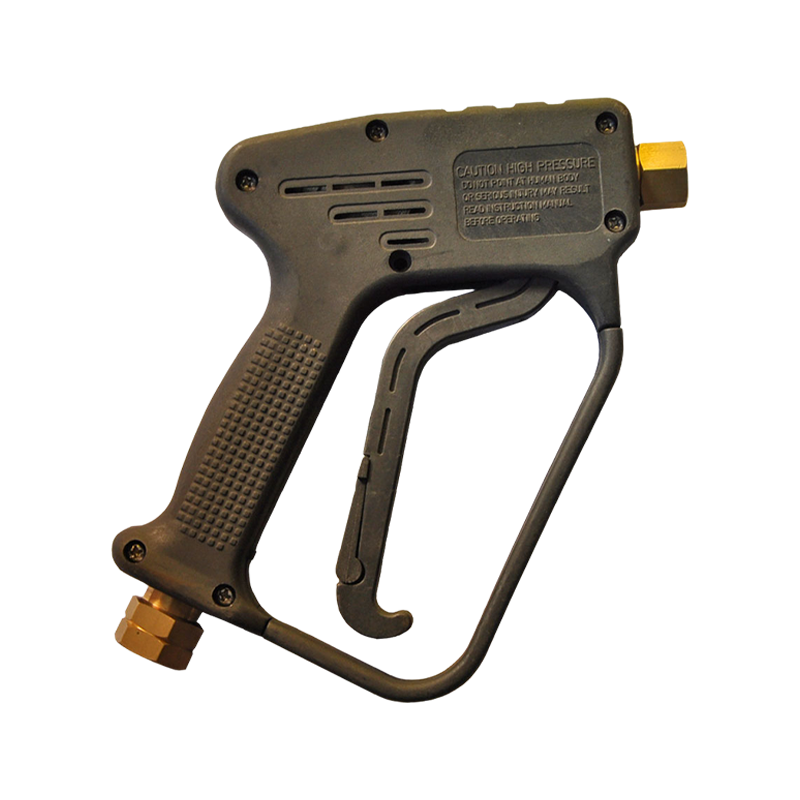
The carpet cleaning high pressure cleaning gun is a tool designed specifically for deep cleaning, using high-pressure water flow to efficiently remove dirt, dust, and stubborn stains from carpet fiber...
See Details
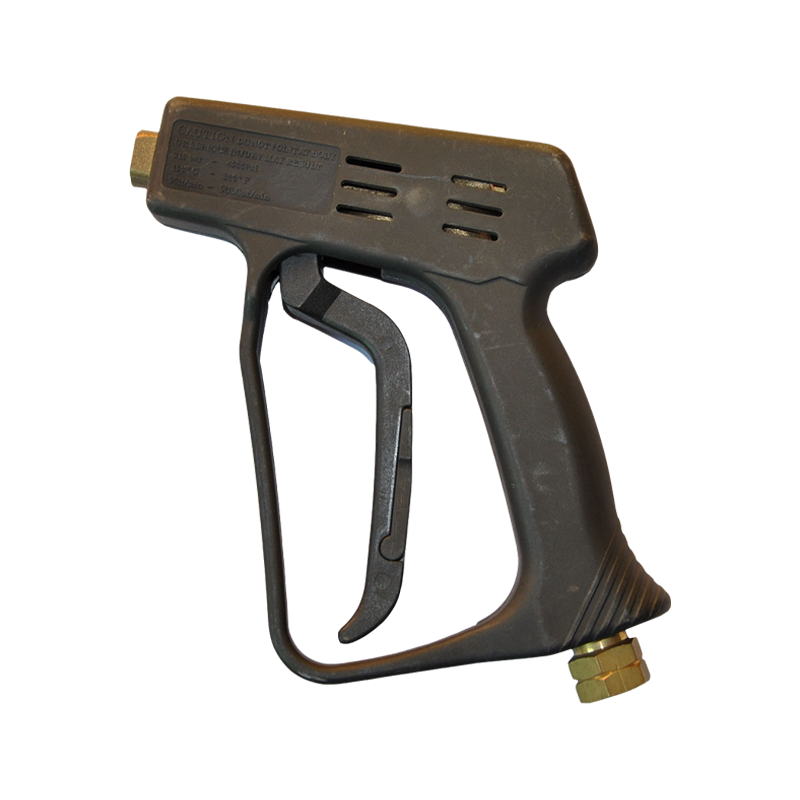
The 4500psi high pressure washing spray gun is a specialized tool designed for high-pressure liquid delivery and cleaning tasks, widely utilized in industrial cleaning, automotive maintenance, agricul...
See Details
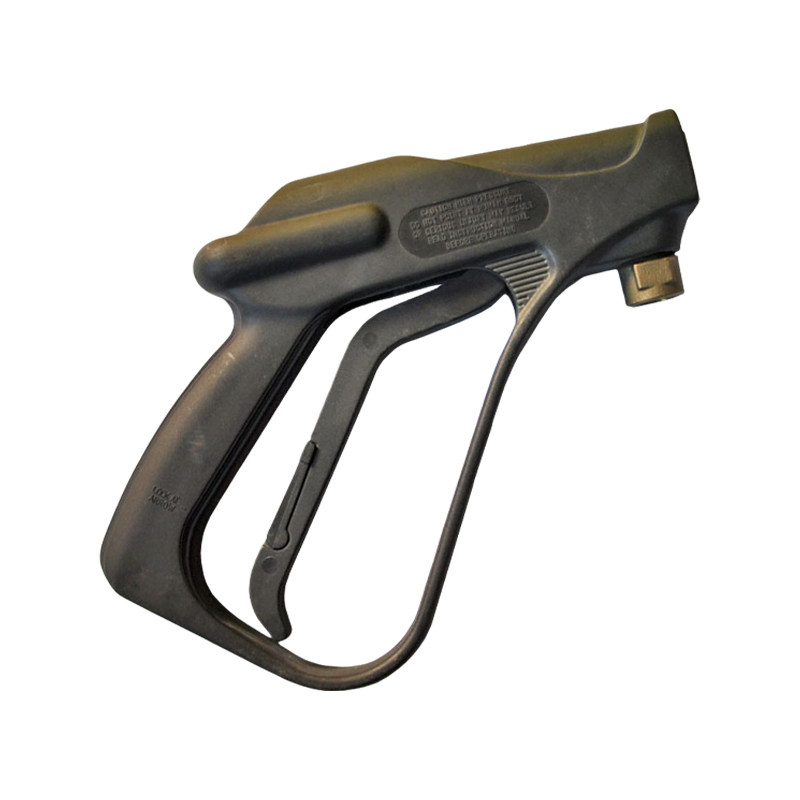
The brass outlet trigger spray gun is made of high-quality brass material and equipped with precise trigger design. Users can adjust the water flow rate and spray angle according to their needs to ach...
See Details
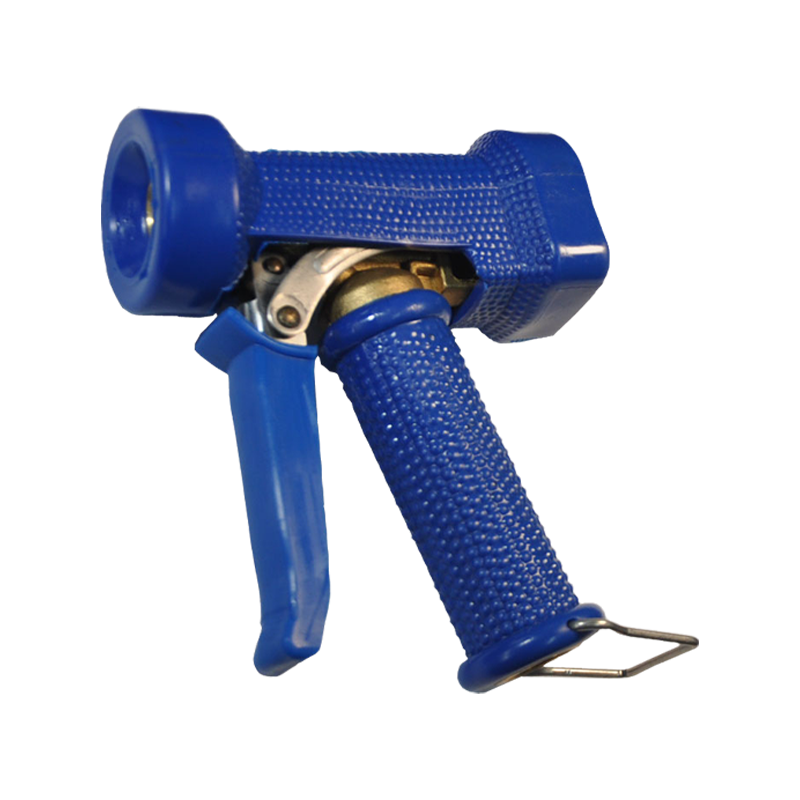
The heavy-duty brass flushing gun is specifically designed for low-pressure applications such as garden irrigation, dust suppression, and equipment cleaning. The ergonomic handle features an anti-slip...
See Details
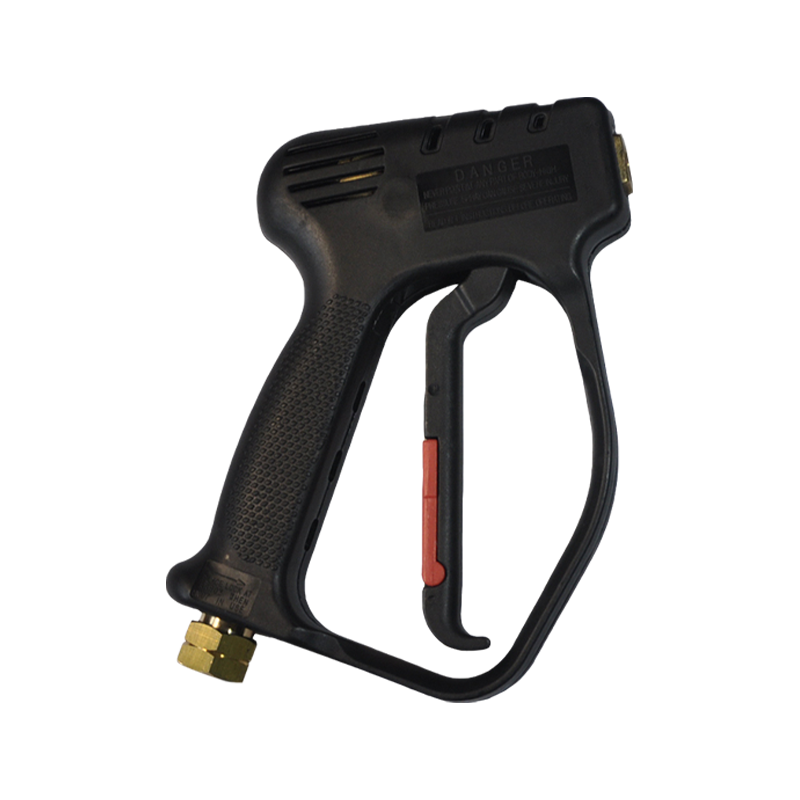
Industrial cleaning trigger spray gun is an efficient and durable cleaning equipment. Its internal sealing components are made of high-strength materials, effectively preventing leakage. Its design ca...
See Details
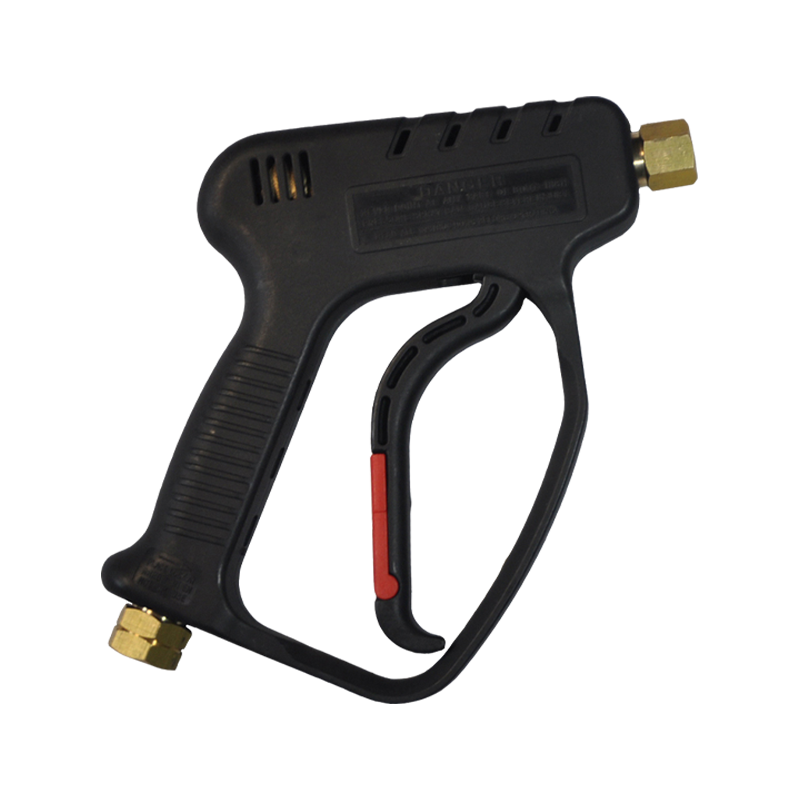
The portable handheld trigger spray gun is made of high-strength engineering plastics and/or metal materials, and the handheld part is coated with anti slip rubber to enhance the safety and comfort of...
See Details

The basic structure and working principle of the foam sprayer Foam sprayer is a device that mixes liquid diluent and air and sprays in the form of foam. It is widely used in car washing, industrial cl...
See Details

What is a high Pressure Washer Water Broom? A high Pressure Washer Water Broom is an accessory tool designed to improve floor cleaning efficiency and is usually used in conjunction with a high-pressur...
See Details

Introduction: Demands and Challenges of Modern Car Washing In modern society, cars have become an indispensable means of transportation in daily life, and almost every family has one or more cars. Wit...
See Details

1. Understand the basic structure and working principle of high-pressure cleaning spray guns The basic structure of a high-pressure cleaning gun A high-pressure cleaning gun consists of multiple parts...
See Details